
|
Today: VCR…Tomorrow: DVD?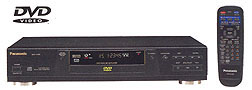
What is DVD? DVD stands for digital video disc or digital versatile disc, depending on the source. Either way, it offers the ability to store more in less space. A standard DVD disc measuring 4.7 inches can hold a two-hour movie, extra scenes, a soundtrack, and a whole lot more. It aims to eventually replace audio CD, videotape, laser-disc and CD-ROM. DVD delivers 540 horizontal lines of resolution making for much sharper images than the standard VCR format, which has 210 lines. DVD sounds better, too: digital sound can be separated into discrete channels, making surround sound possible. DVD-videos require a DVD player connected to a TV monitor. Current DVD players cannot record (yet).Can DVD videos be played on a computer? Most new computers with DVD-ROM drives can also play DVD-Videos. The computer operating system or playback software must support regional codes (that are embedded in the discs) and be licensed to descramble copy-protected videos. Microsoft Windows 98 includes DirectShow 5.2, which provides standardized support for DVD-Video and MPEG-2 playback. DirectShow is available for download and can also be installed in Windows 95. What are the advantages of DVD? The quality and versatility of DVD-Videos and players offer many advantages in the area of education and knowledge advancement:
How much does it cost? The production of DVD Videos involves, in addition to the development costs, the costs of mastering and replication. To prepare a master DVD, video, audio and control information must be encoded and multiplexed into a single data stream, and finally encoded in low level format. While videotapes do not have a mastering cost, DVDs cost about $2,000 to master and about $1.70 to replicate. The cost of replication is expected to drop to about $0.50 soon. Videotapes cost about $2.50 to replicate. DVD players are currently sold at about $300 and up. The price is expected to drop to the VCR levels within a few years. Is DVD the video storage technology of tomorrow? The advantages of the DVD in terms of quality and extra features coupled with projected drop in costs make it a viable alternative for videotapes, laser discs and CDs. For further information: 
|
|
|
For feedback on this article, please write to: TechKnowLogia@KnowledgeEnterprise.org |
|
|
Subscribe | Reader Feedback | To Sponsor | To Advertise Editorial Network | Editorial Policy | Home |
|
|
|
|
| TechKnowLogia, November/December 1999 | Copyright © 1999 Knowledge Enterprise, Inc. |